In the high-stakes digital marketplace of 2026, an auction website is no longer just a bidding portal – it is a real-time engine of adrenaline and competitive trust. For estate liquidators, art galleries, and industrial equipment sellers, an online presence must achieve a relentless balance: maintaining technical stability during high-traffic “hammer moments” while offering a frictionless, low-latency bidding experience. To thrive in today’s auction economy, your design must move beyond static listings to embrace “Synchronous Engagement,” using live-streamed video, instant outbid notifications, and AI-driven “smart-proxy” tools to keep the momentum of the room alive on every screen.
Our analysis of the current landscape focused specifically on “Ajax-Powered Bidding” stability, high-velocity search filtering, and the strategic use of transparent condition reports and high-fidelity zoom capabilities. These elements work together to eliminate “bidder’s hesitation,” ensuring that every participant – whether a seasoned collector or a first-time buyer – feels the security and excitement of a physical auction floor.
Whether you are a boutique auctioneer specializing in rare collectibles or a global marketplace managing thousands of simultaneous lots, the following benchmarks represent the gold standard for auction web design in 2026.
Note on Modern Standards: Current industry leaders demonstrate a clear commitment to “Zero-Lag” synchronization and mobile-first gesture controls for rapid bidding. This selection focuses on design patterns that prioritize urgency, transparency, and transactional security, providing the most strategic value to both the house and the bidder in 2026.
Top Auction Website Designs
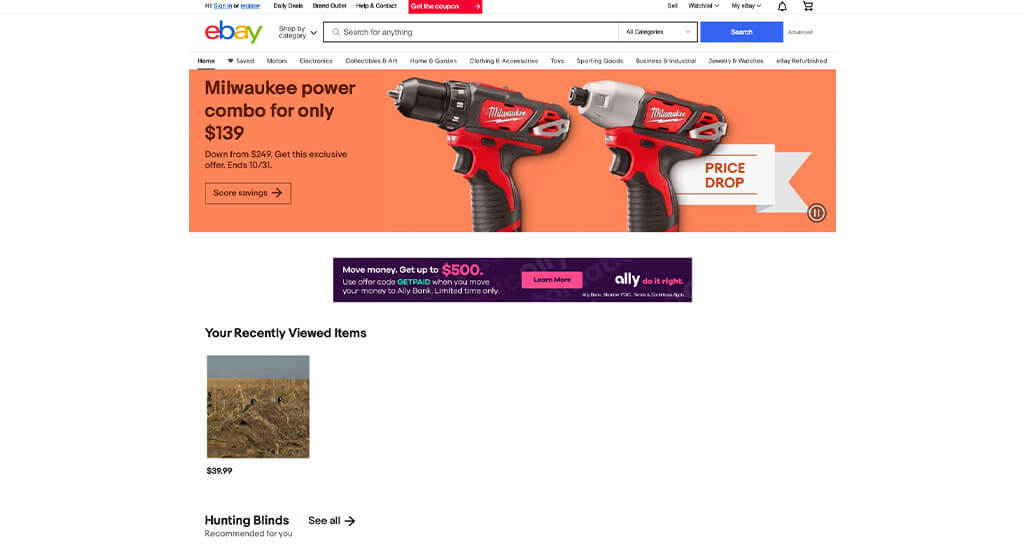
1. eBay
This example had a great balance of white space in order to make everything look sharp and easy to read. A search bar was an addition we couldn’t ignore, especially for a company like this one. They showcase many popular products in order to get customers get excited. eBay had marketing in mind when allowing for an ability to see what current prices are and how many people are watching an item.
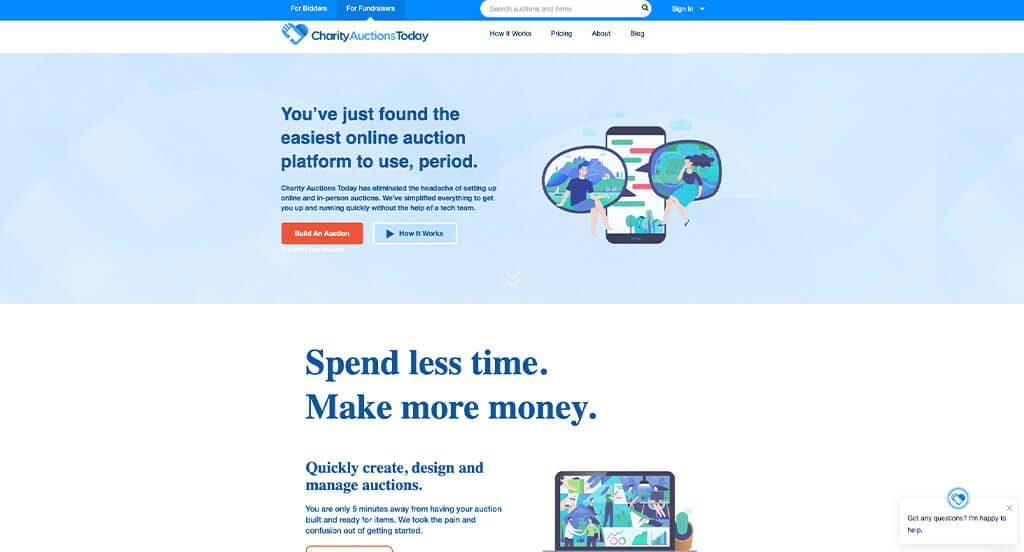
2. Charity Auctions Today
Right away, our team thought this logo was very creative and combined their values well. Their graphics and images was an addition that we couldn’t ignore. Charity Auctions Today uses blue, white, orange and green which we like because it creates a unique harmony. This professional font was refreshing to feel more reliable as a company.
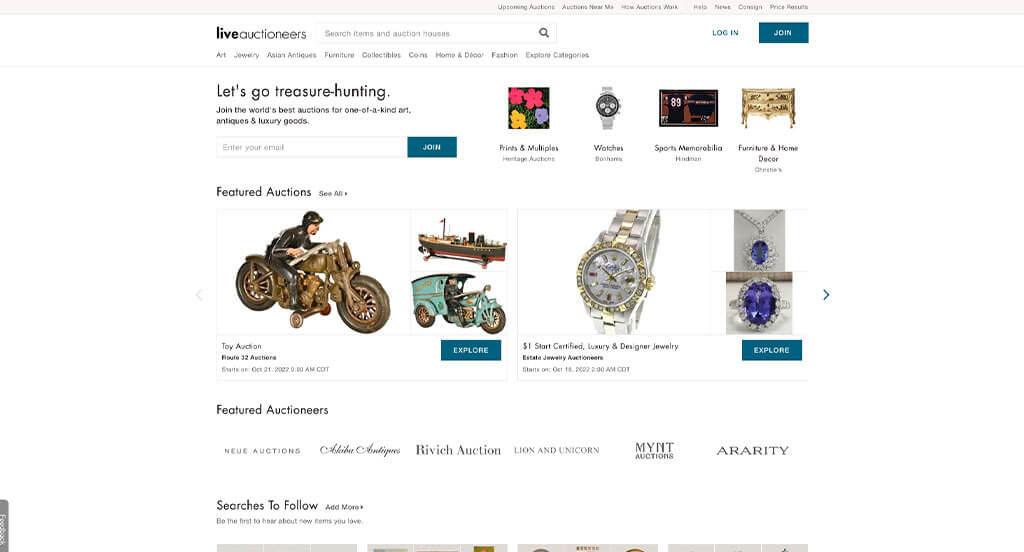
3. Live Auctioneers
In Live Auctioneers, we noticed how there was a sense of organization for all their featured items. Showing how many people are viewing each item live was a brilliant addition. Showing television networks that have featured their business was another feature that we enjoyed. We also loved how there was a search bar that helps people to find the items they’ve been searching for.
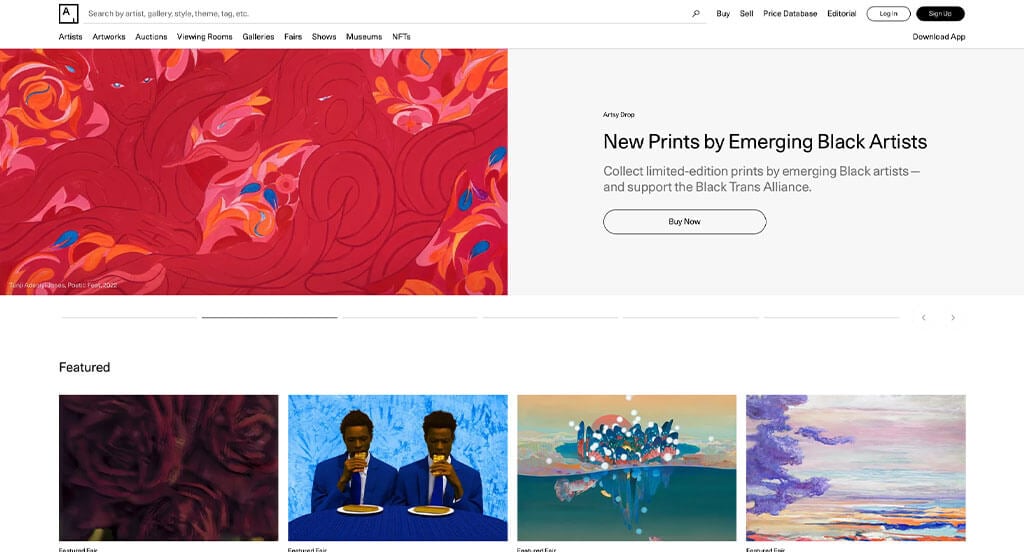
4. Artsy
This example was amazing because they took advantage of a theme for their auctions. Even though they sell art, they offer a variety of styles, mediums, colors, and themes. We also thought it was a nice touch to include news articles right along next to their art. Another feature you might notice was this white and black color scheme that allows these pieces to stand in the spotlight.
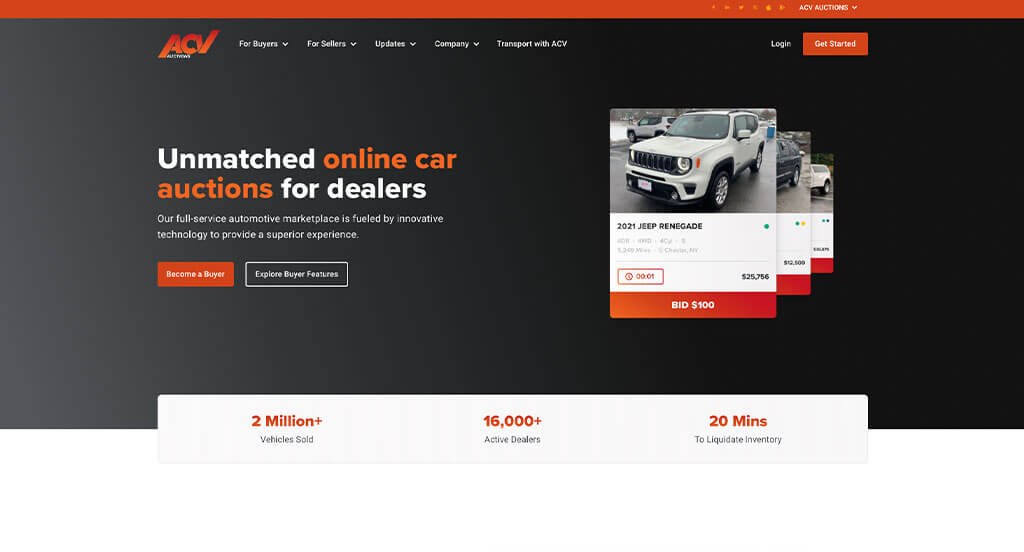
5. ACV Auction
We loved how this slanted graphic that appears in their logo is recreated over and over to create a sense of repetition. Their titles use large fonts that helps them stand out and create a sense of visual hierarchy. Having lots of short paragraphs was another thing that was extremely helpful for those wishing to read through their content. ACV Auction also did an amazing job with their domain that was simple and easy to remember.
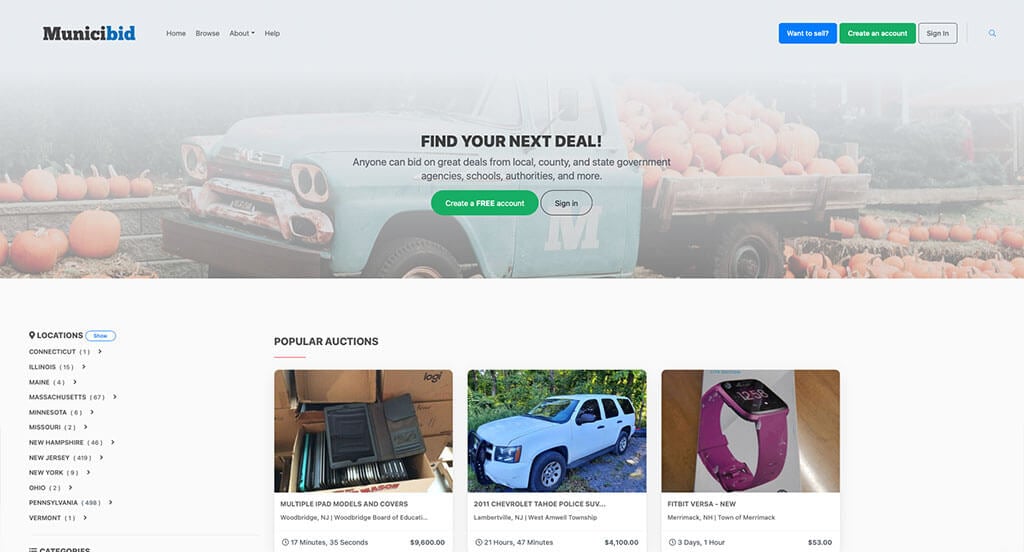
6. Municibid
This was an example that is sure to inspire other companies with their organized information. It was extremely helpful to have a section for popular auctions, while also sorting into categories on the left side. The ability to search by location was something that we noticed. A search bar can be found in this header which makes it very easy for people to find what they’re looking for.
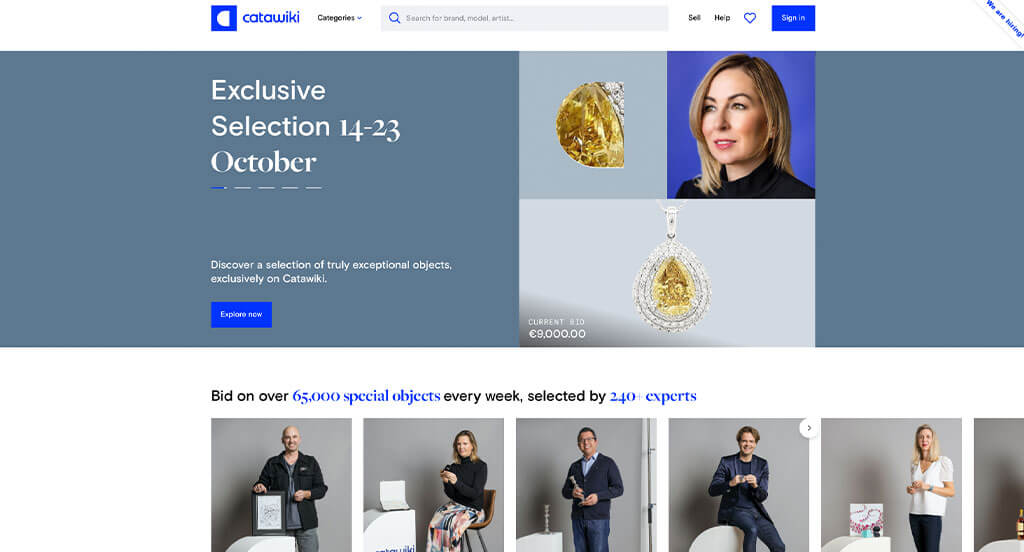
7. Catawiki
Showcasing a clean and intuitive layout, Catawiki keeps things simple. As we scrolled through, something that we noticed was their use of icons to help organize their objects. Additionally, many texts were highlighted with bright blue in order to show where additional links are included. A simple balance of white space was refreshing for a unique site.
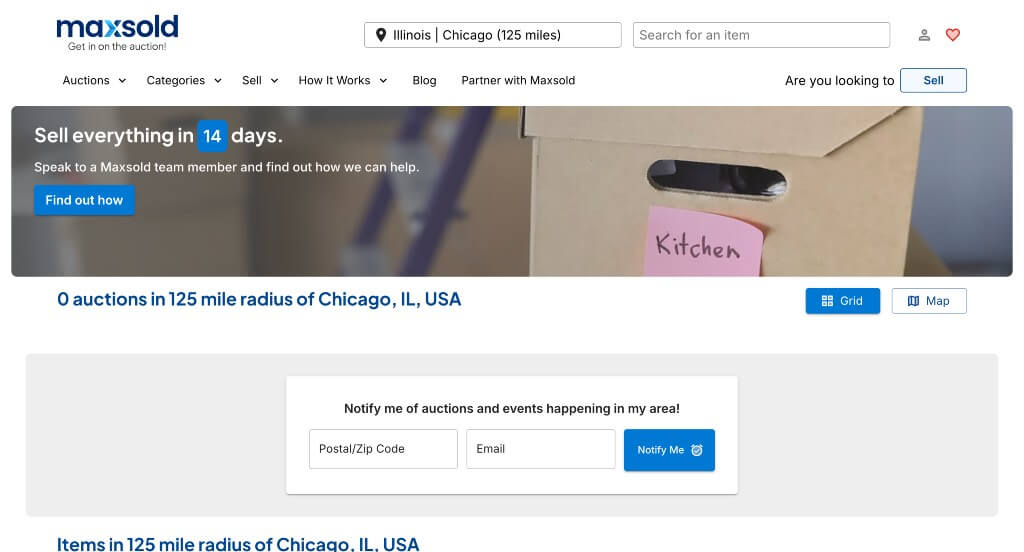
8. MaxSold
There was lots of image collages to help people know what they could find at each auction. They really thought about their viewers when ensuring simple navigation throughout these pages. It was interesting to show why the seller is auctioning off their items. Using red text to show how much time is left on auctions was a choice that we couldn’t ignore.
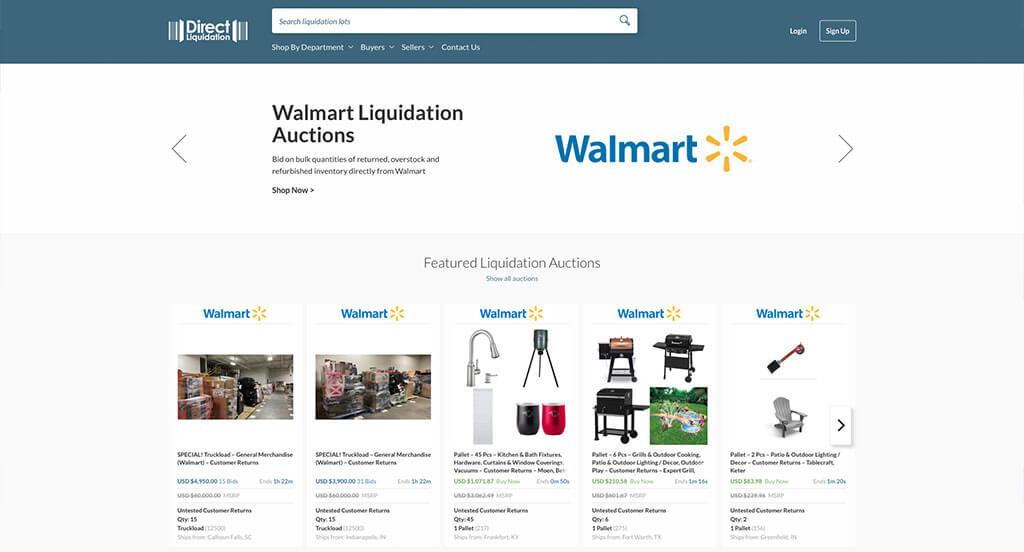
9. Direct Liquidation
Visuals dominate this site by blending icons, graphics and images. A search bar is something that proves to be helpful for any type of company, but especially ones like this one. There are also lots of high quality, professional looking images in that highly engaged customers. There is also a perfect balance of white space that makes for an alluring template.
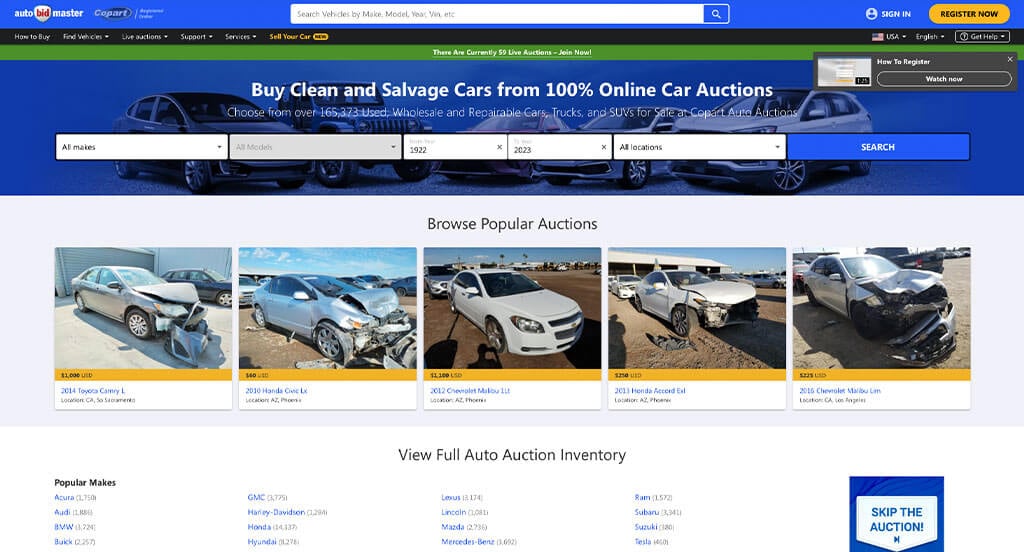
10. Auto Bid Master
Once again, a search bar can be noticed here which is a great addition. We like how they have a contrast of light and dark colors throughout these pages. Including their customer reviews right in their homepage was also a nice idea. A bright color scheme helped make this auction company stand out for sure. Additionally, their domain was very simplistic in order to allow for finding their site easily.
How to Build a Great Auction Website
Are you building a new webpage for your auction company? Yay! Let’s explore the some steps to create or redesign. If you’ve already chosen your domain, hosting, and platform, feel free to skip ahead.
1.) Purchasing a Domain Name
Choosing a domain name is key to your auction company’s online identity – it’s your web address and an important part of your branding. Here’s how to pick the perfect one:
- Brainstorm: Start by writing down some domain names using your business name, auction type, and location.
- Simplicity: Keep your domain name simple, clear, and easy to spell – avoid complex words, hyphens, or numbers.
- Consistency: Make sure to include your brand name in your domain – for example, avoid names like SoldSoldSold.biz if your company is Bill’s Fast Auction Company.
- Availability: Check if your desired domain is available. If it’s taken, see if it’s unused and for sale – but avoid overspending on it.
- Domain Extensions: Choose a domain extension that fits your site – .com is most common, but options like .net, .org, or .auction may suit your business better.
- Legal Considerations: Before registering, run a trademark search to avoid infringing on other brands – don’t use names tied to other auction companies or software providers.
- Register the Domain: Once you’ve chosen an available domain, register it through a trusted provider like GoDaddy, or Namecheap for easy management.
2.) Choosing a Website Platform
After choosing a domain, you’ll have to pick a platform. WordPress is a great option for auction sites with content, calendars, chat, and contact forms, though builders like Wix can work too.
- WordPress: WordPress is a flexible, popular CMS ideal for auction sites of all sizes. With thousands of themes and plugins, it supports everything from basic pages to advanced bidding features. Most users opt for the open-source version on their own hosting for greater control and scalability.
- Wix: Wix is a hosted website builder with easy-to-use tools, similar to WordPress. It’s a good option for auction sites and doesn’t require separate hosting.
Auctioneers usually add eCommerce only when creating an online auction marketplace – but it’s a competitive space with many established platforms.
Web Hosting Requirements
Platforms like AuctionNinja or Shopify include hosting, so no separate service is needed. For self-hosted sites, you’ll need a reliable hosting provider. Here are some options:
- WP Engine: WP Engine offers reliable hosting and a user-friendly control panel, making it ideal for auction sites. It includes seamless backups, though costs can rise with advanced features.
- SiteGround: SiteGround is a reliable host with excellent support, user-friendly backups, and affordable pricing – great for auction companies.
- Digital Ocean: Digital Ocean offers powerful cloud hosting, best for advanced needs. It’s a solid option if you have technical expertise – consider AdminGeekZ for server management help.
3.) Selecting a Website Template
For most auction companies, using a pre-built website template is an affordable, efficient choice. If you prefer a unique design, consider hiring a professional web developer or custom ecommerce developer .
Here are some top theme marketplaces to explore:
WooCommerce Auction Themes
You’ll find a variety of ecommerce auction themes for WooCommerce on ThemeForest.
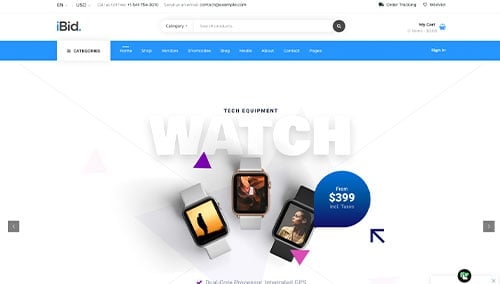
iBid – Themeforest
$75
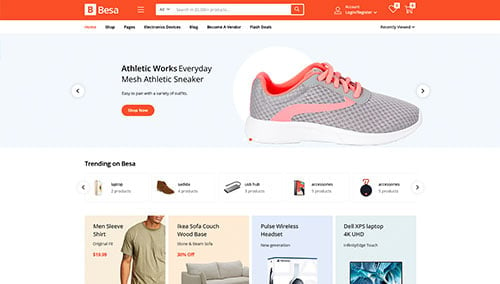
Besa – Themeforest
$59
Shopify Auction Themes
Explore free and paid themes at themes.shopify.com, or consider options available on marketplaces like ThemeForest.
iBid – Themeforest
$95

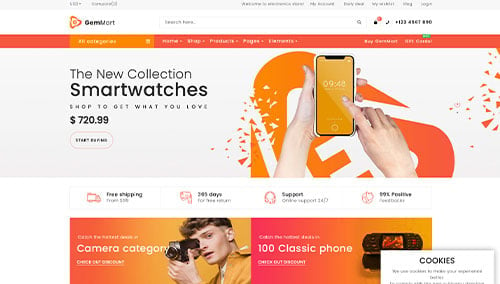
Gemmart – Themeforest
$29
Wix Auction Themes
Browse through free and paid themes in the Wix marketplace at wix.com, where you can find suitable options.
4.) Crafting Content & Adding Visuals
With your domain, platform, and theme ready, it’s time to create compelling content!
Here are some tips for writing engaging website copy:
- Know your target audience: Before writing, understand your audience – their demographics, needs, and interests. Tailor content to them to boost relevance and search visibility.
- Define your key messages: Define your key messages to reflect your brand, highlight your strengths, and clearly show the benefits of your business’ service.
- Keep it concise and scannable: Since readers often skim, keep content concise. Use short paragraphs, bullet points, subheadings, and bold text to enhance readability.
- Create clear and compelling headlines: Create compelling headlines that highlight your auction site’s value and draw visitors in to explore more.
- Incorporate keywords strategically: Use tools like Ahrefs or Semrush to find relevant keywords and add them naturally to your content. Avoid overuse to maintain readability and user experience.
- Maintain a conversational tone: Write in a friendly, conversational tone that connects with your audience. Avoid jargon unless it’s necessary, and speak directly to your readers.
- Edit and proofread: Always proofread before publishing. Check grammar, spelling, flow, and brand consistency – tools like Grammarly can help!
- Utilize ChatGPT for assistance: Need help with ideas or content? Try AI tools like ChatGPT for support.
Pair your content with high-quality visuals. Here are some tips:
- Opt for high-quality images: Use high-resolution, well-composed images – blurry visuals can hurt your reputation.
- Ensure relevance: Choose images that support your content and add context or visual interest to your auction site.
- Explore stock photo resources: Use trusted stock sites like Unsplash, Pixabay, or Shutterstock for quality auction-related images. Follow licensing rules and give credit when needed.
- Customize images when possible: If possible, customize images to match your brand for a cohesive look. Tools like Adobe Photoshop or Canva can help.
- Optimize image file sizes: Compress images to reduce load times without losing quality. Tools like TinyPNG can help improve speed and SEO.
5.) Post Launch Strategies
Once your auction site is live, focus on key post-launch tasks to boost its success. Here are some essential tips:
- Search Engine Optimization (SEO): Boost local visibility with strong SEO – research keywords, optimize content, build internal links, and update regularly. Consider hiring our SEO team or using services like The HOTH.
- Paid Advertising: Attract targeted traffic with paid ads on platforms like Google or Facebook. Use ourPPC management services or find experts on sites like Mayple for quick results.
- Conversion Rate Optimization (CRO): Use tools like Google Analytics to track performance and spot drop-off points. Run A/B tests with VWO to boost conversions and improve user experience.
- Website Security: Protect your auction site with strong security: use SSL, firewalls like Sucuri, and regular backups. Keep everything updated, monitor for threats, and consider tools like UptimeRobot for uptime tracking.
- Website Maintenance: Keep your auction site running smoothly with regular maintenance. Update WordPress plugins/themes, monitor speed, fix errors, and back up often. Use our website maintenance services or hire freelancers on Upwork.
- User Feedback and Testing: Gather user feedback and run tests to understand visitor behavior. Use insights to improve and optimize your auction site over time.
- Content Updates: Keep your content fresh with regular auction blog posts and updates. Accurate, engaging content attracts visitors and encourages shares and return visits.
Post-launch digital marketing is key to long-term success. Stay proactive, track performance, and adjust strategies to meet your goals and audience needs.